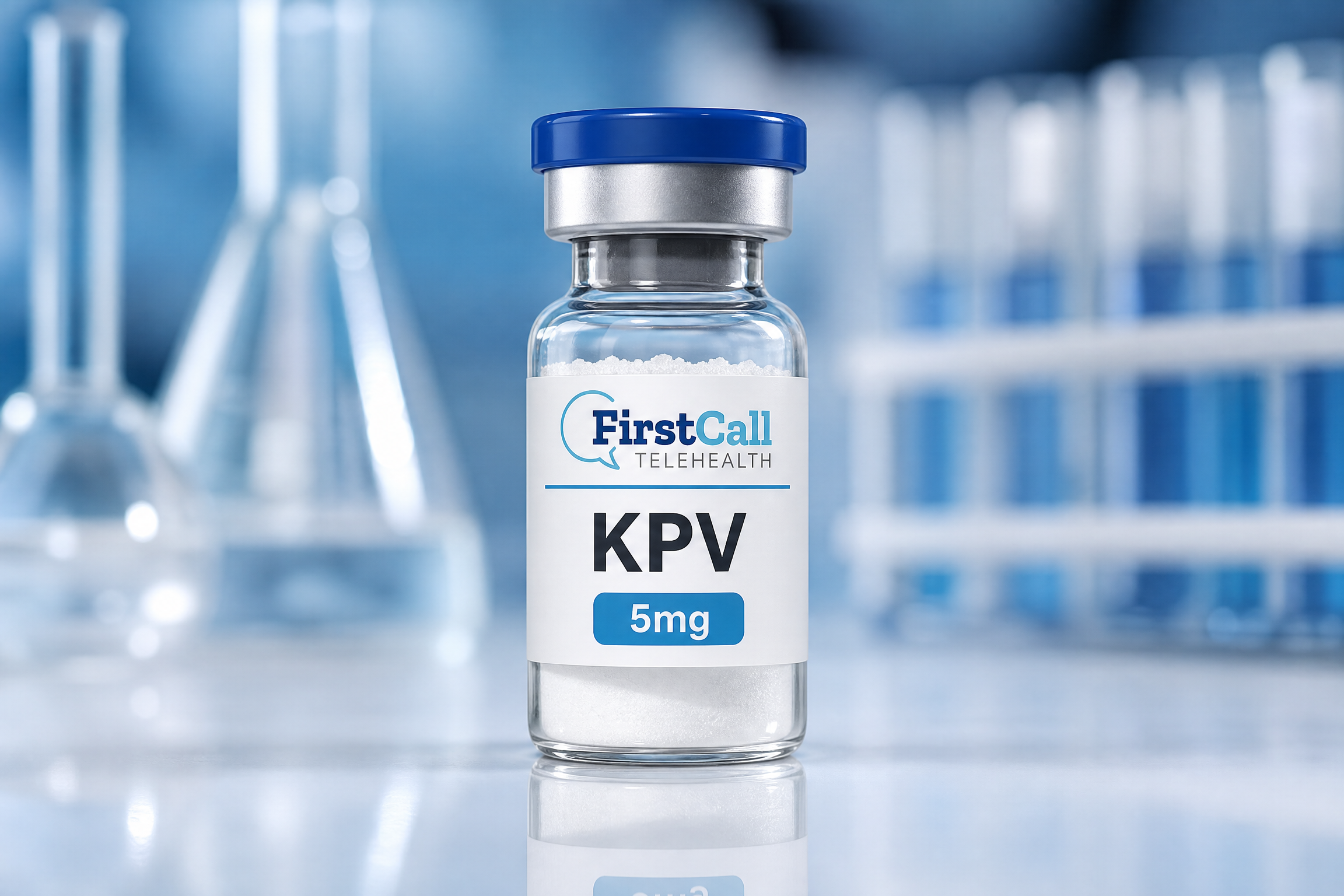
KPV
A short tripeptide (from α-MSH) studied for anti-inflammatory and gut-support effects.
KPV is a tripeptide derived from the end of the α-MSH hormone. It’s studied for anti-inflammatory activity, including interest in gut and skin contexts.
Prescription required. Final clinical decisions rest with the prescribing physician.
What is KPV?
KPV (lysine-proline-valine) is a small fragment of α-melanocyte-stimulating hormone. Research interest focuses on its anti-inflammatory properties — it appears to act within cells to dampen inflammatory signaling — with attention to gut and skin applications.
It is accessed through licensed compounding pharmacies under a physician’s prescription; it is not an FDA-approved finished product, and FDA guidance on peptide compounding continues to evolve.
Potential benefits
Anti-inflammatory
Studied for dampening inflammatory signaling at the cellular level.
Gut support
Researched in the context of gut inflammation and barrier health.
Skin interest
Examined for inflammatory skin conditions.
Non-immunosuppressive profile
Studied as targeted anti-inflammatory action rather than broad immune suppression.
How it works
How it’s taken
A subcutaneous injection (oral forms also exist), on a schedule set by the prescribing physician.
Typical protocol
Run in cycles with periodic reassessment; the physician sets the route, dose, and duration.
How ordering works
Complete the intake
Share your goals, health history, and current medications — about 5 minutes.
Physician evaluation
An independent, board-certified physician reviews your intake and, if appropriate, prescribes KPV with a dosing protocol.
Compounded & shipped
The prescription is filled by a licensed compounding pharmacy and shipped to your door with instructions.
What to know before KPV
KPV is a bioactive compound. The physician you’re connected with will review the relevant risks and contraindications for your situation before prescribing.
- •Injection-site reactions are the most common side effect.
- •Generally well tolerated; long-term human data is limited.
- •Disclose your full history and current medications before starting.
- •Source matters: gray-market “research only” peptides skip physician oversight and quality testing. FirstCall connects you with a licensed physician and a compounding pharmacy that follows USP standards.
KPV FAQ
What is KPV used for?
KPV is studied for anti-inflammatory effects, including gut and skin contexts. It’s used off-label under physician supervision and is not FDA-approved.
Is KPV FDA-approved?
No. It is prepared by licensed compounding pharmacies and prescribed off-label; FDA guidance on peptide compounding is evolving.
How is it taken?
Usually a subcutaneous injection, though oral forms exist; the physician sets the route and dose.
Is it an immunosuppressant?
It’s studied as a targeted anti-inflammatory rather than broad immune suppression, but discuss your history with the physician.
How much does it cost?
KPV starts from $149/month. Final pricing is confirmed after your physician evaluation. The initial evaluation is free.
Ready to start KPV?
Complete a short medical intake — a supervising physician reviews it and, if appropriate, writes your prescription, and a licensed pharmacy ships to your door.
Pricing & regulatory note: The $149/mo price is an indicative starting point confirmed by the compounding pharmacy after physician evaluation. KPV is not an FDA-approved finished drug product; it is prepared by licensed compounding pharmacies and prescribed off-label. FDA guidance on peptide compounding continues to evolve and availability can change. A prescription is required.